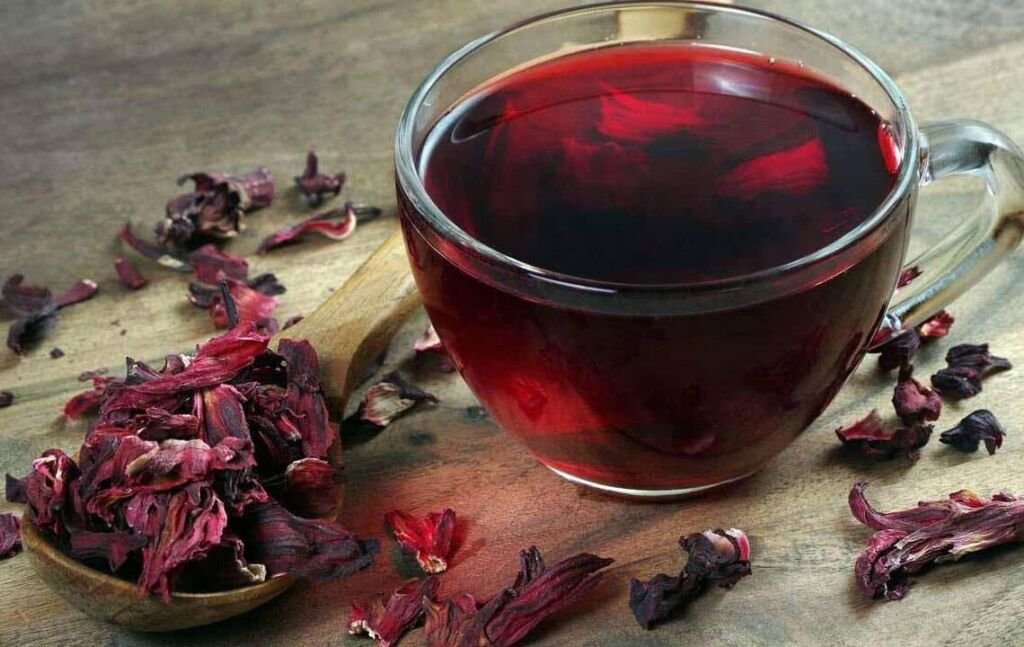
Hibiscus tea is a vibrant, ruby-colored infusion made from the dried calyces (sepals) of the Hibiscus sabdariffa plant — also known as roselle, karkadé (in Arabic-speaking countries), or simply hibiscus tea. With a slightly tart flavor, fruity aroma, and striking red hue, this drink adds personality to your daily hydration, whether served hot or iced.
In the United States, you can find dried Hibiscus sabdariffa labeled as “hibiscus tea” or “roselle tea” in health food stores and tea shops. It’s important to note that ornamental hibiscus varieties (the large garden flowers) are not suitable for tea preparation.
This guide explores hibiscus tea benefits, cultural traditions, preparation methods, storage tips, and a practical FAQ.
⚠️ Disclaimer: This content is for informational purposes only and does not replace medical or nutritional advice.
🌺 What Is Hibiscus Tea and Why It’s So Popular
Hibiscus tea is made by infusing dried calyces in hot water, resulting in a floral, fruity, and slightly sour beverage that’s both refreshing and versatile. It pairs wonderfully with spices like cinnamon and clove, citrus fruits like lemon and orange, and herbs such as mint and lemongrass.
Sensory Profile at a Glance
- Aroma: Floral and fruity with a tangy note
- Flavor: Refreshing tartness
- Color: Deep red that intensifies with steeping time

- USDA Certified Organic Hibiscus Flowers
- Cut and Sifted Flowers
- Product of Egypt, Packed in the USA
🌿 Hibiscus Tea Benefits and Culinary Curiosities
Hibiscus tea is a delicious way to diversify hydration and bring more color to your diet.
- Naturally light beverage: Unsweetened hibiscus tea is virtually calorie-free, ideal for replacing sugary drinks.
- Culinary versatility: Adds color and a tangy note to syrups, jams, mocktails, and desserts.
- Perfect pairings: Pairs beautifully with lemon, orange, apple, and spices such as cinnamon or cardamom.
- Rich in natural pigments: Studies indicate that Hibiscus sabdariffa contains anthocyanins and polyphenols that contribute to its vibrant color and sensory appeal.
- Hot or cold: Enjoyable both hot or iced — and excellent for cold brew preparations.
☕ Traditional and Cultural Uses
Across Africa and the Middle East, karkadé is served chilled at celebrations. In Asia and the Caribbean, roselle appears in teas, jams, sauces, and even pickled dishes. In North America, hibiscus tea has gained popularity as a refreshing beverage that supports hydration and culinary creativity.
These uses reflect cultural appreciation rather than medicinal claims.
📊 Nutritional Table – Brewed Hibiscus Tea (100 g)
| Component | Amount | %DV* |
|---|---|---|
| Energy | 0 kcal | 0% |
| Carbohydrates | 0 g | 0% |
| Protein | 0 g | 0% |
| Total Fat | 0 g | 0% |
| Saturated Fat | 0 g | 0% |
| Fiber | 0 g | 0% |
| Sodium | 0 mg | 0% |
| Potassium | trace | — |
| Vitamin C | trace | — |
Values estimated for a 2,000 kcal diet. Source: USDA FoodData Central.
🍵 How to Prepare Hibiscus Tea (Simple Recipe)
Yield: 2 cups • Time: 10–15 minutes
Ingredients
- 1 heaping tablespoon of dried hibiscus calyces (Hibiscus sabdariffa)
- 500 ml (2 cups) of water
- Optional: lemon slices, cinnamon stick, or a touch of honey
Directions
- Heat the water until it just starts to bubble.
- Remove from heat, add the hibiscus, and cover.
- Let steep for 7–10 minutes.
- Strain and serve. Adjust with lemon or honey to taste.
Tip: For a smoother taste, try cold brew — steep the dried flowers in cold water for 6–8 hours in the refrigerator.

- PREMIUM BOROSILICATE GLASS CONSTRUCTION: Made from top-quality, heat-resistant borosilicate glass, the GROSCHE Joliette …
- WITH REUSABLE STAINLESS STEEL INFUSER: The Joliette teapot features a removable stainless steel infuser, ideal for loose…
- GENEROUS 42 OZ CAPACITY: With a spacious 1250 ml (42-ounce) capacity, this teapot is perfect for multiple cups, whether …
🍓 Tasty Variations
- Citrus Hibiscus: Add lemon or orange slices for extra freshness.
- Spiced Hibiscus: Combine with cinnamon and cloves for a warm, aromatic version.
- Cold Brew Hibiscus: Brew in cold water and serve with ice and mint.
🧑🍳 Culinary and Creative Uses
- Hibiscus syrup: Boil water, sugar, and dried hibiscus to make a vibrant red syrup for desserts and mocktails.
- Homemade jam: Perfect with strawberries or apples for a tangy, colorful jam.
- Sauces and glazes: Adds acidity and shine to roasted veggies or tofu.
- Frozen cubes or popsicles: Freeze with small fruit pieces for a refreshing treat.
💆♀️ Cosmetic and Aromatic Uses (With Caution)
Some people use cooled hibiscus tea as a hair rinse or aromatic bath for its fragrance and color. Always test on a small area first, avoid contact with eyes, and discontinue use if irritation occurs. These are cultural practices without scientific proof.
🏡 Storage and Cultivation Tips
Storage:
- Keep dried hibiscus in a tightly sealed jar, away from heat and moisture.
- Store in a cool, dark place to preserve aroma and color.
Cultivation (for U.S. climates):
- Hibiscus sabdariffa grows best in warm, sunny regions like Florida, Texas, and Southern California.
- Use loose, well-drained soil with regular watering.
- Harvest calyces when they turn deep red and fleshy.
- Ornamental hibiscus (Hibiscus rosa-sinensis) is not edible and should not be used for tea.
⚠️ Precautions and Safety Notes
- Hibiscus tea is naturally acidic — adjust steeping strength to your taste.
- People taking blood pressure or diuretic medications should consult a healthcare provider before regular use.
- Pregnant, nursing women, and children should seek personalized guidance.
- If any adverse reactions occur, stop consumption and seek medical advice.
❓ Frequently Asked Questions (FAQ)
1. Does hibiscus tea help with weight loss?
No beverage causes weight loss on its own. Hibiscus tea can help diversify hydration in a healthy diet.
2. Can I drink it every day?
Yes, in moderation. Vary your herbal teas and consult your doctor if you use medication.
3. Is it better hot or cold?
Both are great — hot is cozy, cold is ultra-refreshing.
4. How should I sweeten it?
If desired, use honey or cane syrup instead of refined sugar.
5. Can I mix it with other herbs?
Yes! It pairs well with mint, lemongrass, or ginger.
6. Can I use garden hibiscus?
No. Use only Hibiscus sabdariffa (roselle). Ornamental species are not edible.

- MEASUREMENTS AND BENEFITS: With a 6 inche diameter, this Granite Molcajete is perfect for preparing small to medium size…
- DURABLE CONSTRUCTION: Crafted from durable granite with a natural finish, this mortar and pestle set is easy to clean, o…
- FUNCTIONALITY & SIZE: With a 6 inche diameter, granite construction, and natural finish, this Molcajete Spice Grinder bl…
🌼 Conclusion: Why Hibiscus Tea Deserves a Place in Your Routine
Hibiscus tea is colorful, aromatic, and refreshing — a perfect companion to your hydration habits. Whether hot, iced, or blended into creative recipes, it adds a touch of elegance and vitality to your day. Enjoy it mindfully, and let its vivid color brighten your cup and your mood.
⚖️ Disclaimer: This content is for informational purposes only and does not replace professional medical or nutritional advice.
Prepare your tea the right way
If you plan to use this plant to make tea, use the Nutritive Blog tea infusion timer. Proper infusion time helps preserve active compounds and ensures better results.
✍️ Author Box

Article written by Alexandre Zorek, graduate in Business Administration, nutrition student, and postgraduate in Botany. Passionate about orchids, photography, and natural nutrition, father of Bianca and Beatriz, he shares reliable, easy-to-understand information about plants, fruits, teas, and vegetables.