Verbena (Verbena officinalis), also known as common vervain or European verbena, is a medicinal plant widely used in traditional herbal medicine across Europe and Asia. Valued for its calming, digestive, anti-inflammatory, and expectorant properties, verbena has been used for centuries to support both physical and emotional well-being.
Its leaves and flowers contain active compounds such as verbenalin, flavonoids, tannins, and iridoids, which contribute to its therapeutic effects. In this article, you’ll discover the main health benefits of verbena, how to prepare the tea properly, different ways to use it, and important safety considerations.
This content does not replace professional medical advice.
What Is Verbena?
Verbena is a perennial herb belonging to the Verbenaceae family. Native to Europe and parts of Asia, it grows naturally in open fields, roadsides, and grasslands. Traditionally, it has been associated with healing rituals, digestive health, and nervous system support.
In herbal medicine, the aerial parts (leaves and flowers) are the most commonly used for teas, infusions, and topical preparations.
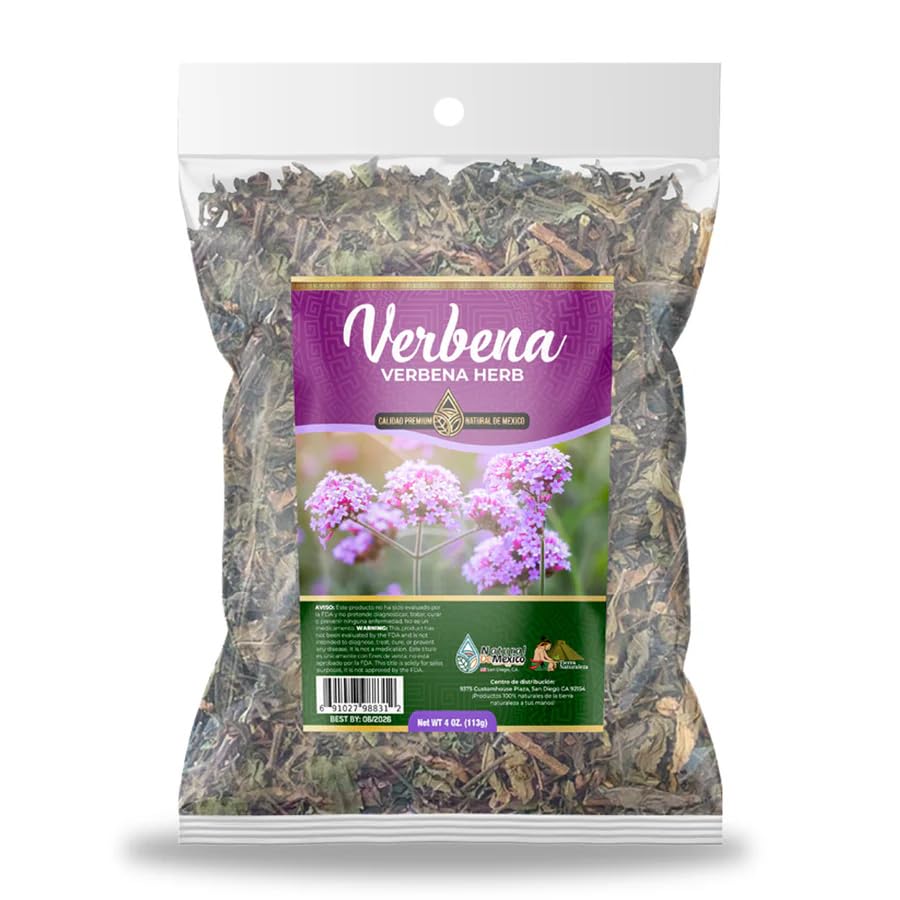
- Verbena Herb Herbal Tea 4 oz.-113g Natural Mexican Herb Hierba Wild Crafted Natural De Mexico
Main Health Benefits of Verbena Tea
1. Natural Calming and Relaxation
Verbena is widely recognized for its mild sedative and calming effects. It helps soothe the nervous system, making it useful for managing:
- Stress and emotional tension
- Nervousness and restlessness
- Mental fatigue
Verbena tea is a gentle option for relaxation without the heavy sedative effects of stronger herbs.
Related reading:
Chamomile Tea: Benefits and How to Prepare
2. Supports Better Sleep
When consumed in the evening, verbena tea may help promote deeper, more restful sleep, especially for those experiencing difficulty falling asleep due to anxiety or mental overstimulation. Its relaxing properties help slow down the body and mind naturally.
You may also enjoy:
Valerian Tea: Natural Support for Sleep and Anxiety
3. Improves Digestion
Verbena stimulates the production of digestive juices and bile, supporting healthy digestion. It may help relieve:
- Bloating and gas
- Indigestion
- Mild intestinal cramps
Drinking verbena tea after meals can support digestive comfort and reduce heaviness.
Related article:
Melissa (Lemon Balm) Tea: Digestive and Calming Benefits
4. Anti-Inflammatory Properties
Thanks to its flavonoids and antioxidant compounds, verbena has anti-inflammatory effects that may help relieve:
- Muscle soreness
- Tension headaches
- Mild inflammatory discomfort
This makes verbena a useful herb for people seeking gentle, plant-based inflammation support.
5. Expectorant and Respiratory Support
Verbena tea has traditionally been used to support the respiratory system. It may help:
- Loosen mucus
- Ease coughs
- Support recovery from colds and mild bronchitis
Its expectorant action helps clear the airways naturally.
See also:
Thyme Tea: Benefits for Respiratory Health

- ☕Humanized design:The 1200ml teapot has a large capacity and a water level scale is added on the surface. The teapot spo…
- ☕Multiple functions: The teapot is suitable for making a variety of different drinks, tea, coffee, herbs, etc. The teapo…
- ☕Safe teapot: It is composed of lead-free high borosilicate glass, using food-grade 304 stainless steel filter screen, w…
How to Prepare Verbena Tea
Verbena tea is easy to prepare and preserves the plant’s medicinal properties when made correctly.
Ingredients
- 1 tablespoon dried verbena leaves
- 1 cup (250 ml) boiling water
Instructions
- Bring the water to a boil and turn off the heat.
- Add the dried verbena leaves.
- Cover and steep for 10 minutes.
- Strain and drink warm.
Recommended use:
Up to 2 cups per day, preferably after meals or in the evening for relaxation.
For best practices, see:
How to Prepare Medicinal Herbal Tea Correctly
Other Ways to Use Verbena
In addition to tea, verbena can be used in several other forms:
- Warm compresses: for muscle tension or mild skin inflammation
- Relaxing baths: add concentrated infusion to bathwater for stress relief
- Tinctures or liquid extracts: available in herbal shops, typically used under professional guidance
Safety, Precautions, and Contraindications
Although natural, verbena should be used responsibly:
- Avoid during pregnancy, as it may stimulate uterine contractions
- Breastfeeding women and young children should use only with professional guidance
- People with gastritis or stomach ulcers should avoid prolonged use due to tannins
- May cause allergic reactions in sensitive individuals
Always consult a healthcare provider if you are taking medication or have chronic conditions.
Final Thoughts
Verbena is a versatile medicinal herb with benefits that range from stress relief and sleep support to digestive comfort and respiratory health. Its gentle yet effective properties make verbena tea an excellent addition to a natural wellness routine.
When used with moderation and care, verbena offers a simple, plant-based way to support balance and relaxation in daily life.

- MEASUREMENTS AND BENEFITS: With a 6 inche diameter, this Granite Molcajete is perfect for preparing small to medium size…
- DURABLE CONSTRUCTION: Crafted from durable granite with a natural finish, this mortar and pestle set is easy to clean, o…
- FUNCTIONALITY & SIZE: With a 6 inche diameter, granite construction, and natural finish, this Molcajete Spice Grinder bl…
Explore More Calming and Medicinal Herbs
If you enjoyed learning about verbena, you may also like:
- Chamomile Tea: Natural Calm and Digestive Support
- Melissa (Lemon Balm): Benefits for Anxiety and Sleep
- Valerian Root: Powerful Herbal Support for Insomnia
Prepare your tea the right way
If you plan to use this plant to make tea, use the Nutritive Blog tea infusion timer. Proper infusion time helps preserve active compounds and ensures better results.