Barbatimão tea is a frequent topic in discussions about traditional Brazilian plants. “Barbatimão” generally refers to the bark of trees in the genus Stryphnodendron, especially Stryphnodendron adstringens—a species known for its high tannin content and strong astringent profile. Popular traditions often mention homemade decoctions (boiled extracts) of the bark.
However, official documents and technical reviews clearly state that barbatimão is considered safe primarily for external use—such as mouth rinses and topical washes—and not as a beverage for routine consumption.
Brazil’s main public health sources reinforce this point consistently.
Throughout this guide, you’ll learn what barbatimão is, its traditional context, culinary curiosities, safety notes, a complete external-use recipe, a nutritional reference table (to understand caloric magnitude), a safe alternative tea to drink, plus FAQs and official links.
⚠️ Important Notice
This article is for informational purposes only and does not replace professional medical or nutritional guidance.
🌱 What Is Barbatimão Tea (and Why It Requires Caution)?
“Barbatimão” refers mainly to the dried stem bark of Stryphnodendron adstringens.
Official Brazilian formularies define the raw material with minimum tannin standards, ensuring identification and quality. These same documents describe barbatimão’s standardized indications exclusively for external use (skin and mucous membranes), including mouth rinses with cooled decoctions.
Scientific reviews note that Stryphnodendron species have long been used for wound care and infections—explaining its cultural popularity—but emphasize that the effectiveness and safety depend heavily on preparation method, plant part, and route of administration.
In home use, therefore, barbatimão should not be treated as a typical herbal tea to drink.
Its technically recognized form is a decoction for mouth rinses or washes, following official guidelines.
✨ Benefits & Traditional Curiosities
✔️ Mouth and throat comfort (external rinse)
A cooled decoction may support hygiene routines when used as a rinse—according to official preparation methods.
✔️ Strong astringency
Its high tannin content creates the “tightening” sensation (astringency). In topical applications, this can form a protective layer and promote comfort—an effect discussed in technical resources.
✔️ Deep Brazilian tradition
Used for generations in external wound care and mucosal rinses. Studies investigate antimicrobial effects, wound recovery, and tannin chemistry.

- WHOLE ORGANIC CHAMOMILE FLOWERS YOU CAN SEE & TRUST – Carefully selected whole chamomile flower heads (not dust or powde…
- NATURALLY MILD FLAVOR – CUSTOMIZE YOUR STRENGTH – Chamomile tea has a naturally light, floral taste. For a stronger cup,…
- CALMING HERBAL TEA FOR YOUR EVENING ROUTINE – Chamomile has been traditionally enjoyed as a gentle, calming herbal tea. …
📜 Traditional Uses (Documented in Official Sources)
Academic compilations and Brazilian herbal formularies list barbatimão as a traditional resource for:
- Topical washes
- Mouth rinses (bochechos)
- External applications for skin and mucous membranes
These records clarify:
❌ It is NOT indicated as a drinkable tea
Official standards classify its use exclusively as external.
📊 Nutritional Table — Brewed Herbal Infusion (100 g)
(Reference for calorie magnitude; barbatimão is NOT consumed as a drink.)
| Component (100 g – brewed) | Amount | % DV* |
|---|---|---|
| Energy | ~0.3–1 kcal | 0% |
| Carbs | ~0.1–0.2 g | 0% |
| Protein | 0.0 g | 0% |
| Total Fat | 0.0 g | 0% |
| Sodium | ~1 mg | 0% |
| Potassium | ~6–9 mg | 0% |
| Calcium | ~2 mg | 0% |
| Iron | ~0.07–0.08 mg | 0% |
* Based on a 2,000 kcal diet.
Reference: USDA/MyFoodData (herbal tea brewed — chamomile).
Why so low?
Because herbal infusions typically use 1–3 g of plant material per cup, so nutrient transfer is minimal.
Safe & Practical Recipe: Barbatimão Decoction (External Use Only)
For mouth rinses / topical washes
Yields: 2–3 applications
Total time: 20–25 minutes
Ingredients
- 1 tablespoon of dried barbatimão bark (Stryphnodendron adstringens), properly labeled
- 300 ml of water
Preparation (decoction + cooling)
- Bring bark + water to a gentle boil.
- Maintain boiling for 10 minutes.
- Turn off heat, cover, and steep for 10 more minutes.
- Strain and let it cool to room temperature.
- Use as a mouth rinse or external wash 2–3 times per day.
- Do not swallow.
- Discard leftovers within 24 hours.
This preparation follows official Brazilian herbal formularies.
It is not a beverage.
☕ Want Something Safe to Drink Instead?
Choose a culinary herb suitable for internal use, like:
See our complete guide: How to Prepare Natural Herbal Teas.

- 【Stovetop Safe Glass Teapot】Our glass teapot with infuser is made of premium borosilicate lead-free glass—durable, toxin…
- 【Removable Stainless Steel Tea Infuser】This glass teapot for stove comes with a removable 18/8 stainless steel tea infus…
- 【Large Capacity & Multi-Functional Tea Pot】With a generous 20oz/650ml capacity, this glass tea kettle lets you brew 1–2 …
🍽️ Culinary vs. Cosmetic Use
🍵 Internal consumption
Not recommended for barbatimão.
💧 External/cosmetic use
Barbatimão-based topical creams exist in Brazil (Anvisa-registered).
Always follow product labels and do a patch test.
🌿 Storage, Quality & Sustainability
✔️ Choose Reliable Suppliers
Barbatimão bark should list:
- Botanical name
- Plant part (bark)
- Batch / origin
- Quality standards (tannin %)
✔️ Storage
Keep dried bark in an airtight container, away from heat, moisture, and light.
✔️ Sustainable harvesting
Barbatimão is a native Cerrado tree.
Removing bark improperly can kill the tree.
Purchase only from ethical, sustainable sources.
⚠️ Safety, Contraindications & Interactions
- Route of use: external only
- Pregnancy & breastfeeding: avoid without professional guidance
- Tannins: may interact with alkaloid-rich plants (form insoluble complexes)
- Iron absorption: tannins can reduce non-heme iron absorption (general tannin caution)
- Persistent symptoms: seek professional evaluation
❓ FAQ — Barbatimão Tea
1) Can I drink barbatimão tea?
❌ No.
It is officially standardized only for external use.
2) Why is it so bitter?
Because of its high tannin concentration.
3) Is all “barbatimão” the same plant?
No—several Stryphnodendron species share the name.
Always check the botanical name.
4) Are there barbatimão creams?
Yes—Anvisa registers topical formulations with barbatimão extract.
5) Can I use it for gargling?
A cooled decoction (external rinse) appears in official guidelines.
Never swallow.
6) Why is there no nutritional table for the bark itself?
Because barbatimão is not classified as food.
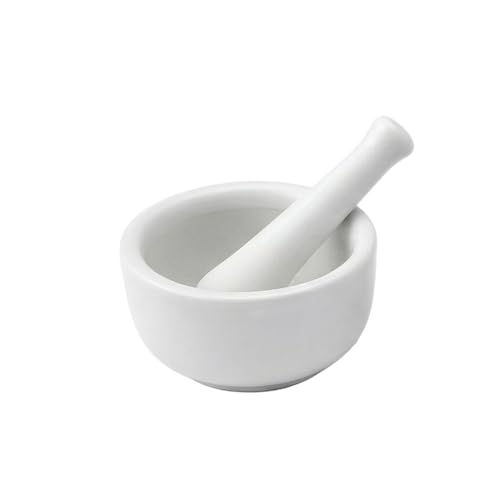
- HIC Kitchen Small Mortar And Pestle Set: Grinds spices, herbs, nuts, seeds, and pills into fine paste or powder; perfect…
- Durable Fine Porcelain: Mortar measures 2.75 x 1.5-inches, pestle measures 2.875-inches; sturdy porcelain construction d…
- Compact And Versatile: Ideal for spice blends, curry pastes, spreads, herbal remedies, nut butters, and pulverizing hard…
⭐ Explore More Herbal Guides (You’ll Love These)
If you’re interested in gentle, safe, and flavorful herbal beverages you can actually drink daily, here are some excellent guides to continue your journey:
🌿 Ginger Tea – Benefits & How to Prepare
A warming, aromatic infusion perfect for digestion and everyday comfort.
🍃 Mint Tea – Uses, Benefits & Variations
Refreshing, caffeine-free, and ideal for both hot and iced preparations.
🌺 Hibiscus Tea – Flavor, Benefits & Safe Preparation
Bright, fruity, and naturally tangy — amazing as a summer drink.
Prepare your tea the right way
If you plan to use this plant to make tea, use the Nutritive Blog tea infusion timer. Proper infusion time helps preserve active compounds and ensures better results.
🧾 Conclusion
Barbatimão tea—understood correctly as a topical decoction, not a beverage—has a long tradition in external care for skin and mucous membranes. When prepared and used according to official guidelines, it may support hygiene routines and localized comfort.
For a pleasant drinkable tea, however, choose culinary herbs with established internal-use safety.
When in doubt, consult a qualified health professional.
✍️ Author Box
Article written by Alexandre Zorek, Bachelor of Business Administration with postgraduate studies in Botany. Passionate about orchids, photography, and natural foods, and father to Bianca and Beatriz, he shares trustworthy knowledge about plants, fruits, teas, and vegetables in a practical and accessible way.