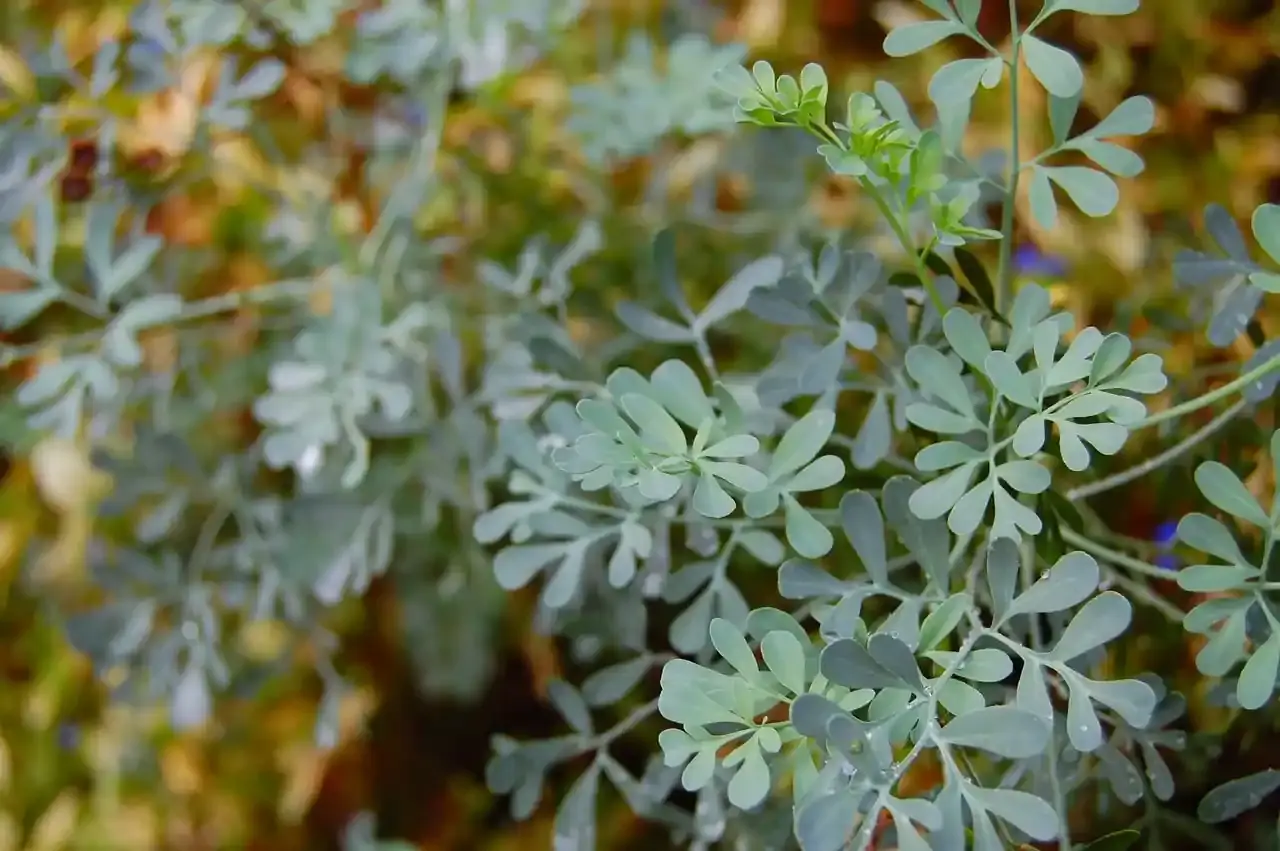
Rue tea (Ruta graveolens) often appears in home remedies and online discussions — but the responsible information must come first: rue tea is not safe to drink.
Scientific reviews and pharmacological monographs describe toxicity, abortion risk, and phototoxic skin reactions associated with the plant and its essential oil. This article explains what rue is, why rue tea should not be consumed, and offers safe herbal alternatives for your wellness ritual — without medical claims. 【Drugs.com】【PubMed】
In Portuguese, “arruda” refers to Ruta graveolens, a member of the Rutaceae family (the same family as citrus fruits). The plant has a strong aroma and a long history of ritual and ornamental use, but from a food safety standpoint, oral ingestion is not recommended. Brazilian and international technical documents list toxicological alerts and botanical identification data, reinforcing the need for caution. 【Brazilian Ministry of Health】
⚠️ Important Warning
This content is for informational and educational purposes only and does not replace professional medical advice.
Rue tea should never be consumed. It poses significant risks, especially for pregnant women and people with sensitive skin or liver conditions.
🌿 What Is Rue Tea — and Why It Raises Concerns
The term “rue tea” circulates in old folk recipes, but there is no safety basis for its ingestion.
Modern references describe Ruta graveolens as contraindicated during pregnancy and unsafe for oral use, due to its abortifacient, hepatotoxic, and gastrointestinal irritant properties when consumed in higher doses.
As of 2025, clinical compendiums continue to emphasize:
Avoid rue during pregnancy and breastfeeding — and there is no clinical evidence supporting its oral use. 【Drugs.com】
Beyond ingestion, skin contact with rue or its essential oil can cause phytophotodermatitis — a severe photo-toxic reaction triggered when compounds like furocoumarins (psoralens) meet UV-A light.
Case reports and medical reviews describe blisters, burns, and pigmentation after handling rue followed by sun exposure (or tanning lamps). 【PubMed】【Lippincott】
- Chamomile Flowers (Loose Leaf) are herbal yellow flowers in their natural size and form, popular for relaxation and soot…
- LEAF TO CUP: From our farms in India to your family, Davidson’s Organics is a vertically integrated provider of premium …
- ALWAYS ORGANIC: Davidson’s Organics is a 3rd generation organic tea grower delivering on its promise of providing top-no…
☕ Rue Tea — Why You Shouldn’t Drink It
Unlike culinary herbs such as ginger, hibiscus, or chamomile, rue is not a food-safe plant.
If your goal is a soothing or relaxing tea ritual, choose herbal infusions with proven safety and proper labeling. Rue should stay out of your cup.
🌼 Traditional and Cultural Uses
In many cultures, rue appears in rituals, incense, or ornamental uses, but not as food.
Technical documents describe its botany and toxicity, but these are not endorsements for making tea — they are safety references explaining why rue should not be used for drinking.
Always interpret traditional mentions as cultural context, not medical advice. 【Brazilian Ministry of Health】
📊 “Nutritional Table” — Why It Doesn’t Apply to Rue
Nutritional labeling (calories, carbs, protein, etc.) applies to edible foods and drinks.
Because rue is not edible, there are no nutritional values listed in TACO or USDA databases.
Instead, official sources focus on toxicology and safety warnings.
| Item | Status |
|---|---|
| Calories, macros, %DV (100 g) | ❌ Not applicable — not for ingestion |
| USDA/TACO listing | ❌ Not registered as a food |
| Technical focus | ⚠️ Toxicity, pregnancy/lactation contraindication, phototoxicity |
If you’re looking for nutritional charts, refer to safe culinary herbs like ginger, echinacea, or hibiscus — all available on the Nutritive Blog.
🍋 Safe Alternative for Your Cup (No Rue)
Since rue tea is not recommended, here’s a warm, safe alternative for your wellness ritual:
Ginger Lemon Tea (safe replacement)
- 1 tablespoon of fresh sliced ginger
- 250 ml (1 cup) of water
- Lemon slices to taste
Instructions:
Heat water until just before boiling. Add ginger slices, cover, and steep for 7–10 minutes. Strain and finish with lemon (hot or iced).
👉 Learn more: Ginger Tea — Benefits and How to Prepare

- 2 INFUSERS, 2 DRIP TRAYS & 1 SCOOP: Two ultra-fine mesh stainless steel tea infusers (1.8″ tall × 1.3″ base × 2″ lid), t…
- 304 STAINLESS STEEL TEA STEEPER: Made from food-grade 304 stainless steel throughout — no plastic basket, silicone, or d…
- ULTRA-FINE MESH FOR LOOSE LEAF TEA: The micro-perforated tea ball holds broken-leaf, dust-grade, and whole-leaf teas wit…
🧴 External or Cosmetic Use — Extreme Caution
Even topical use (such as herbal baths, compresses, or oils) can cause skin burns and hyperpigmentation when exposed to sunlight.
Rue contains furocoumarins, which make the skin photosensitive.
If you handle fresh leaves, wear gloves, wash your hands thoroughly, and avoid sun exposure for several hours afterward. 【PubMed】
🌱 Storage and Cultivation (If You Grow Rue at Home)
- Always wear gloves when handling the plant.
- Keep away from children and pets.
- Do not use leaves, flowers, or oil for drinking or topical application.
- Remember: many Rutaceae species (citrus family) contain phototoxic compounds — sunlight exposure after contact can trigger burns.
⚠️ Safety, Contraindications, and Risks
- Ingestion: Not recommended — may cause gastric pain, liver toxicity, and severe effects in high doses.
- Pregnancy and lactation: Strictly contraindicated. Documented abortifacient and uterine stimulant effects. 【Drugs.com】【PMC】
- Skin exposure: May cause phytophotodermatitis (burns, blisters, or dark spots). Avoid using rue as a “natural repellent.” 【PubMed】
- Medical conditions: People with liver or kidney diseases, children, and elderly individuals should avoid all use.
- Quality/identification: Even if correctly identified (Ruta graveolens), do not drink rue tea — identification does not make it safe.
❓ Frequently Asked Questions (FAQ)
1) Can I drink rue tea?
No. It is toxic and poses serious risks during pregnancy. 【Drugs.com】
2) Can I apply rue compresses on the skin?
No. It may cause severe phototoxic reactions after sun exposure. 【PubMed】
3) Why do some people still mention rue tea?
Mostly due to folklore and misinformation. Modern scientific data and official documents do not recommend ingestion. 【Brazilian Ministry of Health】
4) Is rue essential oil safer?
No. Essential oil is even more concentrated and increases toxicity and photoreactive risks. 【PMC】
5) What are safe herbal replacements?
Choose edible herbs such as:
- Echinacea Tea — Uses and Preparation
- Ginger Tea — Benefits and How to Prepare
- Garlic Tea — Benefits and How to Make
📚 Recommended Reading
- Monograph: Ruta graveolens L. (Rue) — Brazilian Ministry of Health / ANVISA (2015).
Official technical document with botanical identification and safety alerts. - 【Drugs.com】, 【PubMed】 — clinical and toxicological data on rue exposure.

- Handy Kitchen Tool – Enjoy the rich flavors of fresh ground spices, paste, or herbs with our grinder mortar pestle set. …
- Crafted to Last – Made of solid marble stone, our molcajete bowl won’t easily break or crack even with frequent use. The…
- Beautiful Pill Crusher Set – The stone mortar and pestle are all white with gray accents and a smooth outer finish. This…
✅ Conclusion
Rue tea should not be consumed.
Modern scientific literature and official documents highlight serious risks for pregnancy, liver health, and skin safety.
To maintain your tea ritual safely, choose culinary herbs like ginger, echinacea, garlic, hibiscus, or chamomile, always respecting moderation and reliable sources.
That way, you preserve both well-being and safety.
Prepare your tea the right way
If you plan to use this plant to make tea, use the Nutritive Blog tea infusion timer. Proper infusion time helps preserve active compounds and ensures better results.
✍️ Author Box

Written by Alexandre Zorek, graduate in Business Administration and postgraduate in Botany.
A passionate botanist, photographer, and father of Bianca and Beatriz, Alexandre shares trustworthy, practical knowledge about plants, fruits, teas, and vegetables.