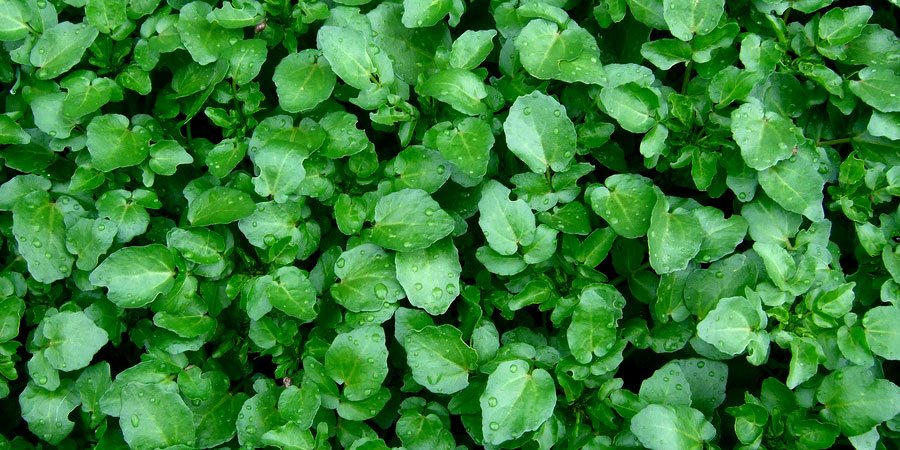
Watercress (Nasturtium officinale) is a leafy vegetable well known for its peppery, slightly bitter taste — often used in salads, soups, and even green juices.
Beyond its fresh culinary uses, watercress tea stands out as a traditional infusion enjoyed in many regions, appreciated for its intense aroma and cultural significance passed down through generations.
In some areas of Brazil, watercress is also called “agrião-d’água” or “mastruço-d’água”, since it naturally grows in humid soils near streams.
This variety of local names reflects the cultural richness of the plant, which is also found in Europe and Asia, where it has been cultivated for centuries.
Preparing watercress tea is a unique way to enjoy this plant beyond the kitchen — creating an aromatic, flavorful drink deeply rooted in folk tradition.
🌿 Nutritional Table – Watercress (100 g, raw leaves)
| Component | Amount (per 100 g) | %DV* |
|---|---|---|
| Energy | 17 kcal | <1% |
| Carbohydrates | 1.3 g | <1% |
| Proteins | 2.6 g | 3% |
| Lipids | 0.3 g | <1% |
| Fiber | 1.1 g | 4% |
| Calcium | 120 mg | 12% |
| Iron | 1.3 mg | 9% |
| Potassium | 330 mg | 9% |
| Vitamin C | 43 mg | 95% |
| Vitamin A | 2,350 IU | 47% |
*Daily values based on a 2,000 kcal diet.
Source: TACO – Brazilian Food Composition Table / NEPA-UNICAMP.

- Watercress Tea (Loose) (4 oz, ZIN: 511437)
- No fillers.
- Manufacturer: TerraVita
🍃 Benefits and Culinary Curiosities
Watercress has a spicy flavor similar to arugula but with a sharper note.
Its tea has a strong, distinctive aroma appreciated by those who enjoy bold herbal drinks.
🌱 Wellness Benefits
- Traditionally used as part of balanced diets.
- Rich in natural antioxidants like vitamin C and beta-carotene.
- Contains essential minerals such as iron and calcium.
- Very low in calories, making it a great choice for light meals.
🍽️ Culinary Curiosities
- Eaten raw in salads but also sautéed, blended into juices, or brewed into tea.
- In Europe, it’s a classic ingredient in creamy soups.
- The tea is made from fresh leaves and can be paired with honey or lemon for a milder flavor.
🏺 Traditional and Popular Uses
Watercress tea appears in folk records from Brazil and several other countries:
- In Brazil: Many families prepared watercress tea regularly, associating it with general wellness.
- In Europe: Historical references trace its infusion use back to the Middle Ages, especially among farmers.
- In Asian cultures: Watercress is commonly eaten fresh, but also used in soups and herbal teas.
⚠️ These uses belong to cultural traditions and should not replace medical advice.
☕ Simple Watercress Tea Recipe
Ingredients:
- 1 cup of fresh watercress leaves
- 300 ml (1 ¼ cup) of filtered water
- Honey or lemon to taste (optional)
Preparation:
- Wash the leaves thoroughly under running water.
- Heat the water until it starts to boil, then turn off the heat.
- Add the watercress leaves, cover, and let steep for 10 minutes.
- Strain and serve warm.
- Add honey or lemon if desired to soften the flavor.
📌 Tip: Never boil the leaves directly — this helps preserve nutrients and aroma.

- This teapot is completely hand crafted, made from heat resistant borosilicate glass, specially designed with non drippin…
- Removable high-grade 18/10 stainless steel mesh infuser filter for loose teas or blooming teas, the lid fits the tea bas…
- This beautiful teapot can be placed directly in the microwave oven or on either gas or electric stove tops, use a medium…
🌸 Culinary and Cosmetic Uses
🍽️ Culinary Use
Beyond tea, watercress is highly versatile in the kitchen:
- Sautéed with garlic and olive oil.
- Mixed in green juices with orange or apple.
- A classic ingredient in hearty soups and stews.
💧 Cosmetic Use (with Caution)
In folk tradition, watercress tea has been used in skin compresses, though there is not enough scientific evidence to confirm its cosmetic benefits.
⚠️ Always test on a small skin area before use and discontinue if irritation occurs.
🌱 Storage and Cultivation
Storage
- Keep fresh watercress refrigerated and consume within 3 days.
- For longer preservation, wash, dry, and freeze it to maintain some nutrients.
Cultivation
- Grows best in moist, shaded soils.
- Ideal for home gardens with good irrigation.
- A fast-growing perennial, perfect for mild climates.
❓ Frequently Asked Questions (FAQ)
1. Is watercress tea strong?
Yes. It has an intense, peppery flavor characteristic of the plant.
2. Can I sweeten watercress tea?
Yes, adding honey or lemon is common to balance the taste.
3. Can children drink it?
Consumption should be moderate and evaluated by health professionals.
4. Can I make it with raw leaves?
Yes, just pour boiling water over them and let steep.
5. Does it replace medication?
No. It is part of folk tradition and should not replace medical treatments.
6. Can I drink it daily?
Continuous use is not recommended without professional advice.
7. Are there contraindications?
Pregnant and breastfeeding women and people with digestive issues should avoid excessive consumption.
8. Where can I find fresh watercress?
It’s widely available in markets, supermarkets, and home gardens.
9. Can I drink watercress tea cold?
Yes, it can be enjoyed chilled as a refreshing drink.
10. Should I wash it before preparation?
Absolutely. Since it grows in humid areas, watercress must always be well washed.

- 【Pure Natural Marble】Made of marble, this mortar and pestle set features a textured interior for improved friction when …
- 【Unique existence】 Due to the change of the natural color of marble, each mortar and pestle is unique, (please allow a s…
- 【Easy to Clean】❤Please note: Due to its natural marble composition, there may be some powder initially. To fix this, gri…
✅ Conclusion
Watercress tea is a bold, flavorful drink that unites tradition, food culture, and a distinct herbal aroma.
Its consumption is part of folk practices that span generations, offering a refreshing and cultural way to enjoy this unique plant.
👉 Keep exploring Nutritive Blog and discover more about plants and teas that enrich our natural heritage:
⚖️ Disclaimer: This content is for informational purposes only and does not replace medical or nutritional advice.
Prepare your tea the right way
If you plan to use this plant to make tea, use the Nutritive Blog tea infusion timer. Proper infusion time helps preserve active compounds and ensures better results.
📌 Author Box

Article written by Alexandre Zorek, graduate in Business Administration with a postgraduate degree in Botany.
A passionate lover of orchids, photography, and natural food — and father of Bianca and Beatriz — he shares trustworthy knowledge about plants, fruits, teas, and vegetables in a clear and practical way.